Why You're Still Tired Even When You Sleep — and What's Actually Going On
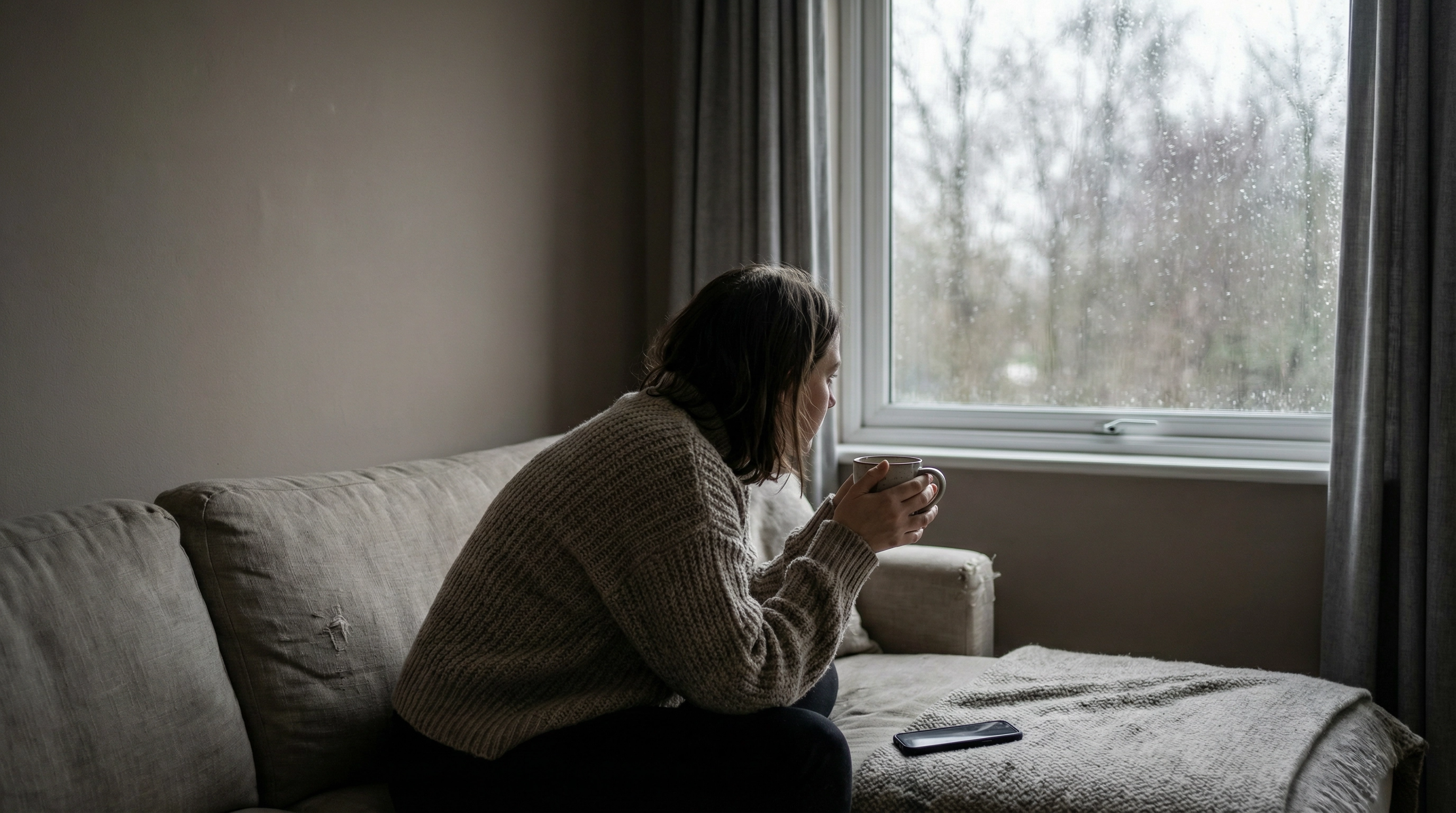
There's a particular kind of tired that sleep doesn't fix.
You go to bed at a reasonable hour. You sleep through the night. You wake up, and within an hour you're already looking forward to sitting down again. The exhaustion is persistent, low-level, and hard to explain.
If this sounds familiar, you're not alone — and the answer probably isn't more sleep.
When Sleep Isn't the Problem
Sleep is one form of recovery. But it only addresses one layer of what the body needs.
The nervous system runs continuously. During the day it's processing light, sound, decisions, social cues, physical demands, screens, and background noise. It does this whether you're conscious of it or not.
At night, sleep gives the body time to run maintenance. Memory consolidates. Cells repair. But if the nervous system is stuck in a state of activation — responding to a level of ongoing stress that it hasn't been able to clear — sleep doesn't fully interrupt that cycle.
You rest. The nervous system doesn't.
This is why some people wake from eight hours of sleep still feeling drained. It's not that they slept badly. It's that the system running in the background never fully downregulated.
The Nervous System and Chronic Load
The nervous system has two basic operating modes: one oriented toward response and activation, and one oriented toward rest and recovery.
In a balanced state, the body moves between these naturally. High-demand periods are followed by genuine restoration. Activation gives way to recovery.
The problem is that modern life applies pressure almost continuously. Work demands don't stop. Screens produce stimulation into the evening. There's rarely a clear point where the day ends and genuine downtime begins.
For many people, the nervous system stays tuned toward activation even when they're physically still. They lie down. They sleep. But the background hum doesn't switch off.
Over time, this creates a kind of tiredness that rest alone doesn't resolve — because rest and nervous system recovery aren't the same thing.
Why Common Recovery Tools Don't Fully Address It
Massage, exercise, and sleep habits all have real value. But they tend to work on the physical layer — muscle tension, cardiovascular fatigue, sleep debt. They're less effective at addressing the neurological layer: a nervous system that's chronically over-activated and hasn't had the conditions it needs to fully downregulate.
Massage reduces muscle tension but still involves external input — touch, sound, movement. Exercise is a physical stressor, even when it's beneficial. Supplements work on biochemistry. None of them create the specific conditions the nervous system needs most: the complete absence of external stimulus.
What Nervous System Recovery Actually Requires
For the nervous system to genuinely downregulate, it appears to need the absence of input — not just reduced input.
This is difficult to engineer naturally. Everyday environments provide near-constant stimulation: noise, light, movement, temperature variation, gravity. Even lying still in a quiet room involves ongoing processing.
Research into sensory deprivation suggests that when the nervous system is deprived of external input — no light, no sound, no gravitational pressure — it has the conditions to genuinely shift state. The body's activation response, no longer receiving signals to process, can begin to settle.
What Float Therapy Creates
A float pod is an environment designed to remove external input as completely as possible.
The water is saturated with magnesium sulphate — dense enough that you float without any effort. The temperature matches the skin's surface temperature, making the boundary between body and water difficult to locate. The pod is dark. It's quiet.
Inside, there's nothing for the nervous system to respond to. No decisions. No stimulation. No background noise. For about sixty minutes, the system that typically runs at high speed has very little to process.
Many people who float regularly describe a quality of rest that feels different from sleep — not better or worse, but different in kind. Something they weren't getting from other forms of recovery.
This post isn't making a claim about what floating will do for you. It's describing an environment — and why, for people whose tiredness isn't fixed by sleep, that environment may be worth exploring.
If you're curious about what float therapy feels like, the best way to find out is to experience it. You can book a single session or explore our membership options — weekly, fortnightly, or monthly. Most members find that consistency is where the real value reveals itself.