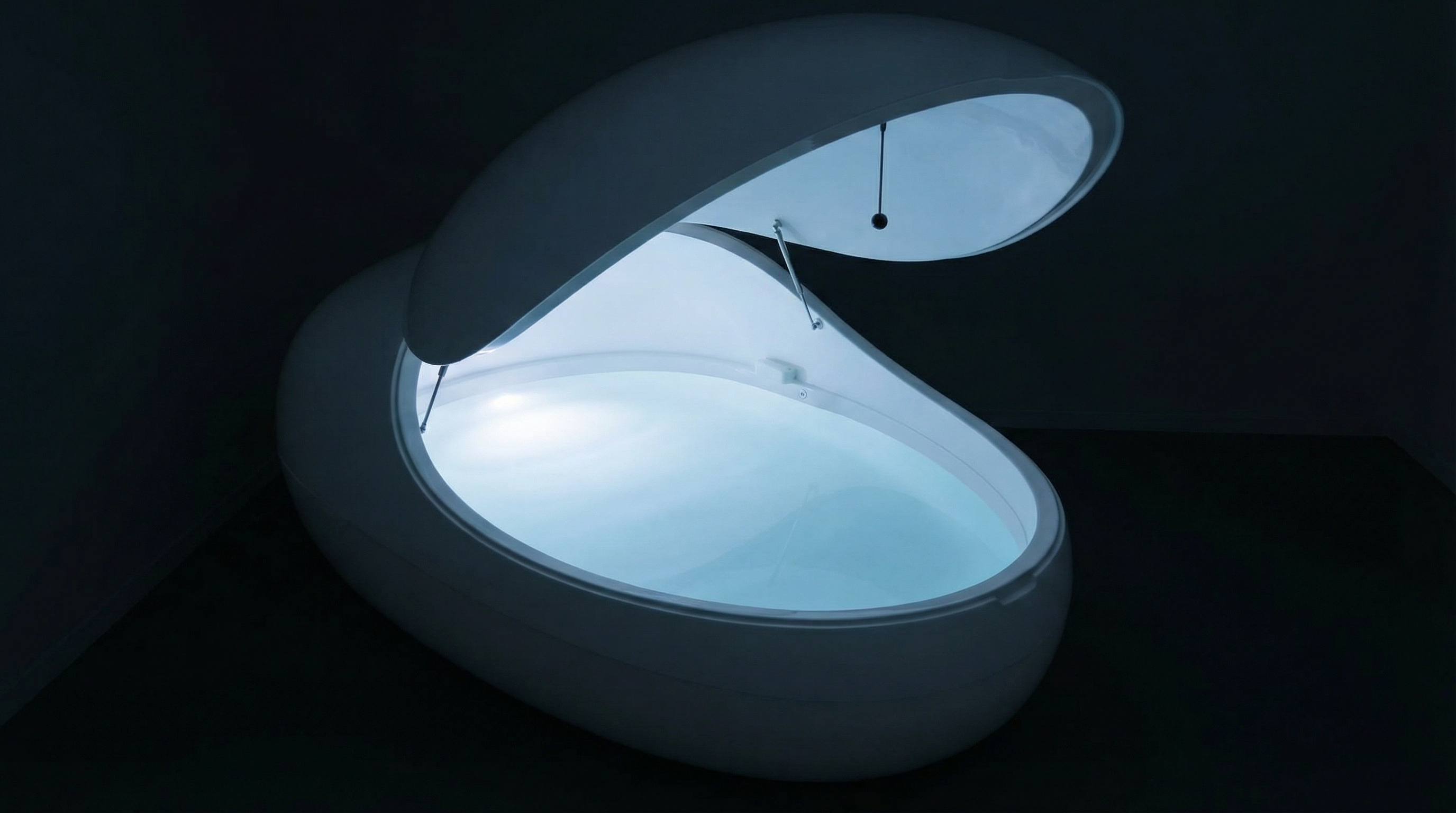
What Is Float Therapy? What Actually Happens Inside a Float Pod
Most people who've considered float therapy have spent a moment trying to picture what it would actually feel like.
Usually the image isn't flattering. A dark, enclosed tank. Eerie silence. Some vague sense of disorientation.
The reality is different in almost every way. Here's what actually happens — from walking in to walking out.
What a Float Pod Actually Looks Like
Modern float pods are spacious — roughly the size of a small car. They're not coffin-shaped. The internal ceiling is high enough to sit up comfortably. The door opens easily from the inside. There's lighting inside that you control.
At Ultrafloat, the float rooms are private, clean, and calm. You shower before and after. The environment is designed to be the least stressful place you've been all week.
Why You Float Without Trying
The water in a float tank contains around 550 kilograms of dissolved magnesium sulphate — the same compound as Epsom salts, in very high concentration. At that density, the water is significantly heavier than the human body. You float automatically, face and torso above the waterline, without any technique or effort required.
This matters because it removes something the body manages every waking hour: gravity. The joints, spine, and muscles no longer carry any load. They don't have to hold you up. That shift — from constant load to zero load — is something most people notice within the first few minutes.
The First Twenty Minutes
Most first-time floaters spend the early part of a session adjusting. The mind is used to having things to respond to. When those things disappear, it looks for them for a while.
This is normal, and it usually settles.
As the session progresses, the body tends to stop bracing. Muscle tension that most people don't realise they're holding — in the shoulders, jaw, lower back — begins to ease, because there's nothing to brace against. The nervous system, no longer processing incoming signals, begins to slow down.
For most people, it's a gradual quieting. Not dramatic. Just a progressive sense of settling.
Common Questions, Answered
I'm claustrophobic — will this be a problem? Many people with mild claustrophobia find floating comfortable. You control the door. You control the lights. You can leave at any point. The pod isn't confining in the way a tight space is — there's room to move freely, and nothing is locked.
Is it hygienic? Yes. The water is continuously filtered and treated with UV light and hydrogen peroxide between every session. The high salinity of the water is itself inhospitable to pathogens. Float tank water is among the most carefully maintained water environments in any wellness setting.
What do I actually do in there? Nothing, ideally. There's no correct way to float. Most people close their eyes and let the session unfold. Some think through things. Some fall asleep. There's no performance required — the environment does the work.
What It Feels Like Coming Out
For many people, stepping out of the pod is the most surprising part.
The contrast between the inside of the pod and ordinary sensory experience is immediately noticeable. Colours seem slightly more vivid. Sounds feel crisper. Many people describe a calm that doesn't feel fragile — a settled, clear quality that can last for several hours.
This isn't a claim about therapeutic outcomes. It's what people consistently describe. When the nervous system has had an extended period with nothing to process, re-entering a normal environment can feel noticeably different to how it felt before.
If you've been meaning to try floating and keep putting it off, the best starting point is a single session. You can book online, show up, and see for yourself. Most people find the reality is considerably less intimidating than they imagined.